

If you’re searching for a clear, practical understanding of gross domestic product, you’re likely trying to make sense of what it really tells you about the economy—and how it affects your financial decisions. Headlines throw the term around constantly, but few explanations connect the concept to real-world impact.
This article breaks down gross domestic product in straightforward terms, explaining how it’s calculated, what drives it up or down, and why investors, policymakers, and households pay close attention to it. We go beyond textbook definitions to examine how GDP reflects production, consumption, capital flows, and broader economic momentum.
To ensure accuracy, this guide draws on established macroeconomic research, central bank publications, and widely accepted national accounting frameworks. The goal is simple: give you a reliable, no-fluff explanation that helps you interpret economic data with confidence and apply it to smarter financial and strategic decisions.
Understanding the Economy’s Ultimate Report Card
As we explore the intricacies of GDP—what it truly measures and the significant impact it has on our economy—it’s also crucial to consider how many financial advisors you should have on your team to navigate its implications effectively – for more details, check out our How Many Financial Advisors Should You Have Ontpeconomy.
Think of GDP like a company’s total revenue. It’s the headline number summarizing a nation’s output. Yet when anchors cite it, few explain what it measures.
GDP is the total value of goods and services produced within a country over a period, usually a quarter or year (Bureau of Economic Analysis). In this gross domestic product explained guide, you’ll see formula: consumption + investment + government spending + net exports.
Practically, compare growth with prior quarters, then watch reactions. Rising GDP supports jobs and stocks, while slowing growth signals caution. By end, you’ll interpret shifts for decisions.
What Is Gross Domestic Product (GDP)? A Simple Definition
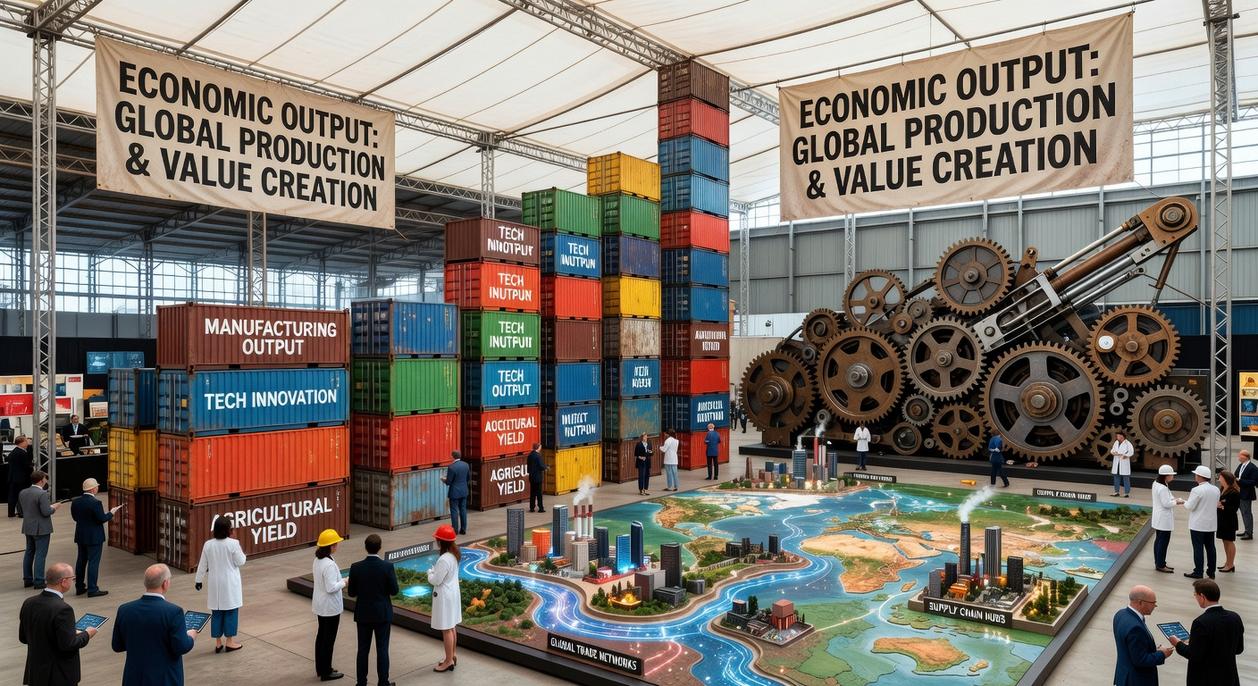
Gross Domestic Product, or GDP, is the total monetary value of all finished goods and services produced within a country’s borders during a specific period, usually a year or a quarter. In simple terms, it’s the economy’s final price tag.
Think of it this way: imagine walking through a giant store that sells everything a country makes—cars, coffee, haircuts, mobile apps, construction projects, even legal advice. At the end of the year, we add up the price of all those finished products and services. That grand total is GDP. (Yes, even your morning latte counts.)
What Counts—and What Doesn’t
Included in GDP:
- Final goods and services sold to consumers
- New home construction and business investments
- Government spending on goods and services
Not included:
- Intermediate goods (like steel used to build a car)
- Sales of used items
- Financial transactions like stock trades
Understanding gross domestic product explained clearly gives you a real advantage. When GDP rises, businesses tend to hire more, wages often increase, and opportunities expand. On the other hand, falling GDP can signal a recession. Knowing this helps you make smarter career, investment, and budgeting decisions—because when you understand the economy’s scoreboard, you’re better prepared to play the game.
How GDP Is Calculated: The Expenditure Approach
At its core, gross domestic product explained through the expenditure approach comes down to a single formula:
GDP = C + I + G + (X – M)
In other words, we total up spending across the entire economy. Let’s break that down.
First, C — Consumption. This is the heavyweight, typically making up about two-thirds of U.S. GDP (Bureau of Economic Analysis). It includes household spending on durable goods (cars, appliances), non-durable goods (groceries, gasoline), and services (rent, healthcare, streaming subscriptions). For example, when families in Texas upgrade their pickup trucks or New Yorkers pay monthly subway fares, that spending feeds directly into GDP.
Next, I — Investment. In economic jargon, this doesn’t mean buying stocks. Instead, it refers to business spending on new equipment, factories, and technology, plus residential construction and inventory changes. When a semiconductor firm in Arizona builds a new fabrication plant, that’s investment. So is a developer putting up condos in Miami.
Then comes G — Government Spending. This covers federal, state, and local spending on goods and services—think highway repairs in Ohio or defense contracts in Virginia. However, transfer payments like Social Security aren’t included because they’re redistributions, not payments for newly produced goods or services.
Finally, (X – M) — Net Exports. Exports (X) add to GDP because they represent domestic production sold abroad. Imports (M) are subtracted since they’re produced elsewhere. So, if California exports almonds to Japan, that counts positively—but imported electronics from South Korea must be deducted to avoid double-counting.
The Different Types of GDP You Need to Know
When people talk about economic growth, they’re usually referring to GDP. But not all GDP is created equal. Understanding the differences is key to getting gross domestic product explained in practical terms.
Nominal GDP vs. Real GDP
Nominal GDP measures a country’s output using current market prices. Sounds straightforward. The catch? It includes price increases caused by inflation.
Real GDP, on the other hand, adjusts for inflation. That means it reflects actual increases in production, not just higher price tags.
Here’s a simple A vs. B comparison:
- Year 1: 10 apples sold at $1 each = $10 GDP
- Year 2: 10 apples sold at $2 each = $20 GDP
Nominal GDP doubled. But production didn’t change. Real GDP would show zero growth because output stayed at 10 apples.
Some argue Nominal GDP still matters because it reflects real-time market value (and they’re right—it’s useful for debt comparisons). But if you want a clearer growth signal, Real GDP is the better indicator. For deeper context, see inflation explained causes effects and real world examples.
GDP Per Capita
GDP per capita divides total GDP by population. It’s often used as a rough measure of average living standards. Not perfect (it ignores inequality), but helpful for comparing countries side-by-side.
The headline number looks authoritative, but it hides blind spots. Even with gross domestic product explained in textbooks, key gaps remain. First, income inequality. GDP and GDP per capita are averages, which means they can rise while most households feel stuck. If a billionaire walks into a café, the “average” wealth of everyone inside skyrockets (statistics can be dramatic like that). That doesn’t mean living standards improved.
Second, non-market transactions. Unpaid caregiving, household labor, and volunteer work generate real value, yet they never show up in official accounts. Some economists argue this omission keeps measurement clean and comparable across countries. They’re not wrong, but it still understates actual economic activity. I’ll admit there’s debate about how to price these contributions fairly.
Finally, environmental and social well-being. Rebuilding after a hurricane boosts output, and pollution cleanups add to growth, even though both follow harm. That paradox should give us pause.
By now, you know GDP is powerful yet imperfect. But what does that really mean for you?
Gross domestic product explained simply is the total value of goods and services a country produces. Nominal GDP measures that value at current prices; real GDP adjusts for inflation, meaning rising prices are stripped out to show true growth. (Inflation is the gradual increase in prices over time.)
Here’s the key: headlines often cite big nominal jumps. Real trends matter more.
When reviewing your portfolio or long-term wealth plan, compare real GDP growth, inflation, and market performance before reallocating assets for smarter decisions.
Mastering Economic Signals for Smarter Decisions
You came here for gross domestic product explained, and now you understand what it measures, why it matters, and how it signals shifts in economic momentum. More importantly, you can see how GDP connects to capital flows, market cycles, and long-term wealth planning.
Economic uncertainty creates hesitation. When growth slows or accelerates, every financial decision feels heavier. But when you understand the forces behind GDP, you’re no longer reacting emotionally — you’re acting strategically.
The real advantage isn’t just knowing the definition. It’s using that knowledge to anticipate trends, position capital wisely, and protect your financial future before the broader market catches up.
Now it’s time to act. Start tracking GDP trends alongside capital flow data and on-chain models to sharpen your edge. If you’re serious about building resilient wealth with data-driven clarity, explore our in-depth economic breakdowns and practical strategy tutorials today. Join thousands of readers who rely on our insights to stay ahead of shifting markets — and take control of your next financial move now.
 Chief Economic Strategist
Ask Michael Torresidosan how they got into capital flow strategies and you'll probably get a longer answer than you expected. The short version: Michael started doing it, got genuinely hooked, and at some point realized they had accumulated enough hard-won knowledge that it would be a waste not to share it. So they started writing.
What makes Michael worth reading is that they skips the obvious stuff. Nobody needs another surface-level take on Capital Flow Strategies, Wealth Planning Techniques, Expert Tutorials. What readers actually want is the nuance — the part that only becomes clear after you've made a few mistakes and figured out why. That's the territory Michael operates in. The writing is direct, occasionally blunt, and always built around what's actually true rather than what sounds good in an article. They has little patience for filler, which means they's pieces tend to be denser with real information than the average post on the same subject.
Michael doesn't write to impress anyone. They writes because they has things to say that they genuinely thinks people should hear. That motivation — basic as it sounds — produces something noticeably different from content written for clicks or word count. Readers pick up on it. The comments on Michael's work tend to reflect that.
Chief Economic Strategist
Ask Michael Torresidosan how they got into capital flow strategies and you'll probably get a longer answer than you expected. The short version: Michael started doing it, got genuinely hooked, and at some point realized they had accumulated enough hard-won knowledge that it would be a waste not to share it. So they started writing.
What makes Michael worth reading is that they skips the obvious stuff. Nobody needs another surface-level take on Capital Flow Strategies, Wealth Planning Techniques, Expert Tutorials. What readers actually want is the nuance — the part that only becomes clear after you've made a few mistakes and figured out why. That's the territory Michael operates in. The writing is direct, occasionally blunt, and always built around what's actually true rather than what sounds good in an article. They has little patience for filler, which means they's pieces tend to be denser with real information than the average post on the same subject.
Michael doesn't write to impress anyone. They writes because they has things to say that they genuinely thinks people should hear. That motivation — basic as it sounds — produces something noticeably different from content written for clicks or word count. Readers pick up on it. The comments on Michael's work tend to reflect that.