
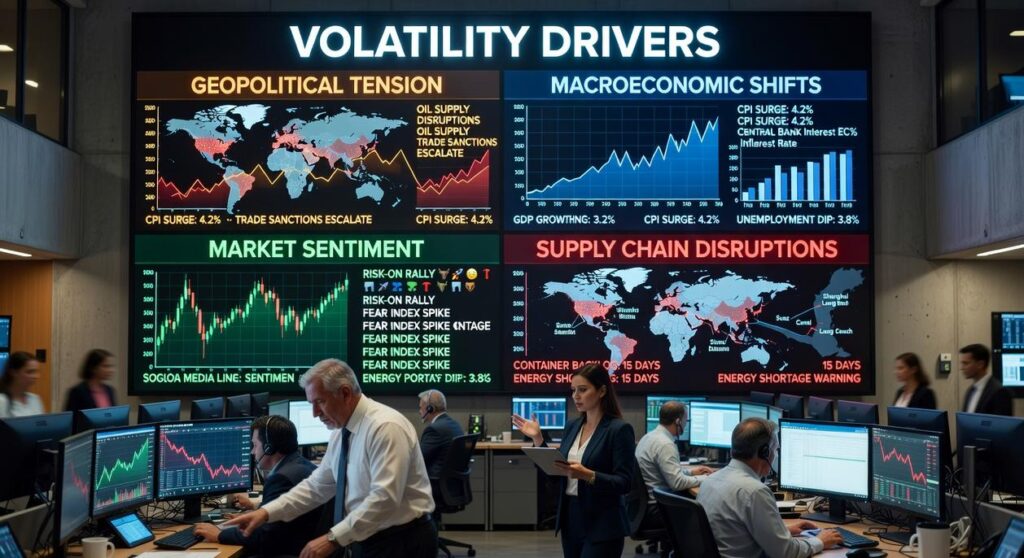
Understanding where money is moving—and why—has never been more important. As capital flows shift across traditional markets and digital assets, investors are searching for clarity on economic fundamentals, on-chain signals, and cost structures that directly impact returns. One area drawing increasing attention is blockchain transaction fees, a critical metric that influences network activity, user behavior, and long-term asset valuation.
If you’re here, you’re likely looking for a clear breakdown of how these financial mechanisms work, what drives changes in fee dynamics, and how they fit into broader capital flow strategies. This article delivers exactly that. We examine the economic forces behind transaction costs, connect them to on-chain models and liquidity trends, and translate complex data into practical wealth-planning insights.
Our analysis is grounded in real market data, established economic principles, and proven financial modeling approaches—so you can make informed, strategic decisions with confidence.
Using a blockchain isn’t free. Every action requires a transaction fee—a necessary “toll” paid to validators who secure and process activity on a decentralized network. Many assume these costs are arbitrary or even exploitative. In reality, they reflect supply and demand for limited block space. When networks get crowded, fees rise; when activity slows, they fall. Still, blockchain transaction fees often feel volatile and confusing, discouraging newcomers. So, what’s really driving them? This article breaks down why fees exist, how they’re calculated, and practical strategies to manage and reduce on-chain spending. Expect clear explanations and actionable cost-saving tips for users.
The primary function of fees in a decentralized network is incentive alignment. Validators (or miners) expend computational power, hardware, electricity, and opportunity cost to verify transactions and append blocks to a chain. Fees compensate that work, transforming raw processing into economic security. In other words, participants are paid to defend the ledger, not out of charity but rational self-interest. Critics argue that blockchain transaction fees are friction, especially when networks get congested. However, without that pricing layer, there is no durable incentive for honest validation, and security quietly erodes.
Just as importantly, fees act as spam filters. By attaching a tangible cost to every submission, networks make it economically irrational to flood the system with junk data. Imagine if email required a micro-payment; inboxes would look very different. The same logic preserves blockspace, a scarce digital commodity.
Some competitors frame fees as a design flaw. Yet when viewed through capital flow mechanics, they resemble tolls funding public infrastructure. No tolls, no roads. Likewise, no fees, no resilient consensus. Pro tip: evaluate a network’s fee market to gauge long-term sustainability, because incentives ultimately reveal whether decentralization is theater or truly self-sustaining. Sustainable systems price security honestly from the start every time.
Decoding the Price: Gas, Bytes, and Network Demand
Let’s start with Ethereum’s formula: Fee = (Base Fee + Priority Fee) × Gas Units.
First, Gas is the unit that measures the computational effort required to process a transaction. Think of it like fuel for code. Sending a simple token transfer? That uses relatively little gas. Interacting with a complex smart contract—say, minting an NFT during a hyped drop—uses far more (because the network is doing more work behind the scenes).
Next comes the Base Fee. This is the minimum required fee per gas unit, set dynamically by the network. Importantly, it’s burned—permanently removed from circulation—reducing supply. Then there’s the Priority Fee, an optional tip paid to validators to incentivize faster inclusion. In other words, if you want VIP access, you pay for it (Taylor Swift ticket logic applies).
Now, some critics argue this model is overly complicated. Why not just charge a flat rate? The counterpoint is simple: demand fluctuates. Ethereum adjusts pricing block by block, making it more responsive to congestion.
By contrast, Bitcoin uses: Fee = Fee Rate (satoshis/vbyte) × Transaction Size (virtual bytes). Instead of gas, Bitcoin measures how much space your transaction occupies in a block. Larger transactions cost more because they consume more limited block space.
Different mechanics, same economic truth: both systems rely on competitive auctions for scarce capacity. When demand spikes, blockchain transaction fees rise. When activity cools, costs fall.
Ultimately, you’re not just paying for computation or bytes—you’re bidding for inclusion in a globally synchronized ledger. And just like any auction, the crowd sets the price.
The Forces Driving Fee Volatility

First, let’s clarify the biggest driver: network congestion. In simple terms, congestion happens when more people want to use a blockchain than it can handle at one time. Block space (the limited room available for transactions in each block) becomes scarce. When a popular NFT mint, token launch, or sudden market swing hits, users start competing to get confirmed faster. That competition turns into a bidding war, and fees spike. It’s basic supply and demand—just faster and more transparent than a rush-hour traffic jam (and often just as stressful).
However, congestion isn’t the only factor. Transaction complexity also matters. Not all transactions are equal. Sending tokens from one wallet to another is relatively simple. Interacting with a DeFi protocol, by contrast, requires multiple computational steps. More computation means more “gas” or processing power consumed, which increases blockchain transaction fees.
Finally, consider the asset’s price. Fees are paid in the network’s native coin, such as ETH or BTC. If ETH doubles in dollar value, the same 0.01 ETH fee suddenly costs twice as much in fiat terms. Nothing changed on-chain—yet your wallet feels it.
Understanding these mechanics also ties into broader concepts like decentralized governance models and economic alignment, where incentives shape network behavior.
Fee Structures Across Different Blockchains
When comparing fee structures across different blockchains, I think it really comes down to what you value more: absolute security or everyday affordability.
Ethereum’s Layer-1 is the gold standard for decentralization and security. Every transaction is validated by a massive distributed network, which is why it’s trusted for billions in value. But during peak demand, blockchain transaction fees can spike dramatically due to congestion (think Ticketmaster-level chaos when everyone clicks at once). Critics argue the cost is justified for the security provided—and they’re not wrong. Still, for smaller users, those fees can feel exclusionary.
Layer-2 solutions like Arbitrum and Optimism take a smarter route. They bundle transactions off-chain and settle them back on Ethereum, preserving security while slashing costs.
- Alternative Layer-1s like Solana and Avalanche prioritize speed and throughput, keeping fees consistently low, though sometimes with decentralization trade-offs.
Personally, I prefer layered scalability over sacrificing core security.
Smarter Moves On-Chain
Last year, I paid $48 to rush a simple token swap—a painful lesson in timing. Since then, I’ve learned to check gas tracker websites before confirming anything. When network congestion spikes, I wait; weekends or late nights often mean cheaper blockchain transaction fees.
For everyday transfers, I now default to Layer-2 networks, which dramatically cut costs. Meanwhile, if a payment isn’t urgent, I lower the priority fee tip and let it settle naturally.
In contrast, urgent trades justify higher tips. Ultimately, understanding fee mechanics turns you from a passive price-taker to an active, strategic participant on-chain.
Mastering Blockchain Transaction Fees for Smarter Crypto Decisions
You set out to understand how blockchain transaction fees work, why they fluctuate, and how to manage them more strategically. Now you have a clearer picture of what drives fee spikes, how network congestion impacts your costs, and what practical steps you can take to avoid overpaying.
High fees eat into profits, delay transactions, and create unnecessary friction—especially when timing and capital efficiency matter most. Ignoring fee mechanics means leaving money on the table. Understanding them gives you control.
The next step is simple: start monitoring network conditions before every major transaction, use fee estimation tools, and align your transfers with lower-traffic windows. Small adjustments can lead to meaningful savings over time.
If you’re serious about reducing friction, optimizing capital flow, and making smarter on-chain decisions, now is the time to act. Join thousands of informed readers who rely on our proven insights and practical models to stay ahead. Explore our latest resources today and take control of your crypto strategy before the next fee spike hits.
 Founder & Chief Executive Officer (CEO)
Elryssa Meldraina has opinions about capital flow strategies. Informed ones, backed by real experience — but opinions nonetheless, and they doesn't try to disguise them as neutral observation. They thinks a lot of what gets written about Capital Flow Strategies, Expert Tutorials, Financial Trends Tracker is either too cautious to be useful or too confident to be credible, and they's work tends to sit deliberately in the space between those two failure modes.
Reading Elryssa's pieces, you get the sense of someone who has thought about this stuff seriously and arrived at actual conclusions — not just collected a range of perspectives and declined to pick one. That can be uncomfortable when they lands on something you disagree with. It's also why the writing is worth engaging with. Elryssa isn't interested in telling people what they want to hear. They is interested in telling them what they actually thinks, with enough reasoning behind it that you can push back if you want to. That kind of intellectual honesty is rarer than it should be.
What Elryssa is best at is the moment when a familiar topic reveals something unexpected — when the conventional wisdom turns out to be slightly off, or when a small shift in framing changes everything. They finds those moments consistently, which is why they's work tends to generate real discussion rather than just passive agreement.
Founder & Chief Executive Officer (CEO)
Elryssa Meldraina has opinions about capital flow strategies. Informed ones, backed by real experience — but opinions nonetheless, and they doesn't try to disguise them as neutral observation. They thinks a lot of what gets written about Capital Flow Strategies, Expert Tutorials, Financial Trends Tracker is either too cautious to be useful or too confident to be credible, and they's work tends to sit deliberately in the space between those two failure modes.
Reading Elryssa's pieces, you get the sense of someone who has thought about this stuff seriously and arrived at actual conclusions — not just collected a range of perspectives and declined to pick one. That can be uncomfortable when they lands on something you disagree with. It's also why the writing is worth engaging with. Elryssa isn't interested in telling people what they want to hear. They is interested in telling them what they actually thinks, with enough reasoning behind it that you can push back if you want to. That kind of intellectual honesty is rarer than it should be.
What Elryssa is best at is the moment when a familiar topic reveals something unexpected — when the conventional wisdom turns out to be slightly off, or when a small shift in framing changes everything. They finds those moments consistently, which is why they's work tends to generate real discussion rather than just passive agreement.