

I’ve been tracking Ontario’s economy through one of the most confusing periods in recent memory.
You’re probably here because the headlines keep contradicting each other. Inflation is cooling but prices stay high. Employment numbers look strong but businesses are struggling to grow. Nothing seems to add up.
Here’s the reality: Ontario’s economy is shifting in ways that surface-level data doesn’t capture. You need to look at where capital is actually moving, not just what the quarterly reports say.
I spent the past quarter analyzing the core indicators that matter. Employment trends, sector performance, capital flows. The stuff that tells you what’s really happening beneath the noise.
This article breaks down Ontario’s economic data the way it should be presented. Clear. Direct. Focused on what you can actually use.
At ontpeconomy, we focus on fundamental economic indicators and real capital movement. We don’t chase headlines. We track where money goes and why.
You’ll see which sectors are genuinely growing, where the risks are building, and what the data actually means for your investment decisions or business strategy.
No speculation. Just the numbers that matter and what they’re telling us right now.
Macroeconomic Snapshot: Ontario’s Core Vital Signs
Let me be straight with you.
Ontario’s economy isn’t moving the way most people think it is.
I’ve been watching the quarterly GDP numbers and something interesting is happening. The financial services sector in Toronto keeps pushing forward while manufacturing in the southwest bleeds jobs. That gap? It’s getting wider.
Here’s what the latest data shows.
GDP growth came in at 1.2% last quarter. Not terrible. But when you break it down by sector, you see the real story. Financial services and tech are carrying the load while traditional manufacturing struggles to stay competitive.
Some economists say this shift doesn’t matter. They argue that service sector growth is just as good as manufacturing. That we should celebrate Toronto’s financial hub status and move on.
But I think they’re missing something big.
When one region thrives while another withers, you don’t just have an economic problem. You have a political one. And political problems have a way of becoming economic problems real fast.
Now let’s talk about inflation.
Ontario’s CPI is running 0.3% higher than the national average. That might not sound like much but it matters when you’re trying to pay rent in Toronto or Hamilton. The Bank of Canada keeps hiking rates and Ontario households feel it harder than most provinces.
Why? Debt levels.
Ontario families carry more mortgage debt per capita than almost anywhere else in Canada (Statistics Canada, Q3 2023). Every quarter-point rate increase hits harder here. The real estate market shows it too. Sales volumes dropped 18% year over year in the Greater Toronto Area.
Here’s where I think we’re headed.
I expect the manufacturing sector to contract another 2-3% over the next six months. The strong Canadian dollar makes our exports expensive and U.S. buyers have options. They’re taking them.
But financial services? That sector probably stays strong through 2024. Toronto’s position as a North American financial center isn’t going anywhere.
The trade balance tells the story I’m watching most closely. Ontario’s exports to the U.S. dropped 4.7% last quarter. That’s the third consecutive decline. When your biggest trading partner buys less and your currency stays strong, you’ve got a problem.
I’m speculating here but I think we see more manufacturing job losses before things stabilize. Maybe another 15,000 to 20,000 positions over the next year.
What does this mean for you?
If you’re in financial services or tech, your sector looks stable. If you’re in manufacturing or export-dependent industries, start planning for rougher conditions.
The Ontpeconomy data I track suggests this two-speed economy isn’t temporary. It’s the new normal.
Interest rates will probably stay elevated longer than most people expect. The Bank of Canada wants inflation at 2% and they’re willing to keep pressure on to get there. That means Ontario’s debt-heavy households face continued strain.
Some analysts think rates will drop by mid-2024. I’m not convinced. Inflation is sticky and the central bank has credibility to protect.
Watch the export numbers. If they don’t improve by Q2 2024, we’re looking at a longer slowdown in manufacturing than anyone wants to admit.
Sector Deep Dive: Where Capital is Moving
Let me show you something most analysts won’t tell you.
They’ll talk about tech funding or manufacturing investments like they’re separate stories. But when you look at the actual capital flows, you see something different.
You see money moving with purpose.
The Tech Sector’s New Reality
The Toronto-Waterloo corridor used to fund anything with “AI” in the pitch deck. Those days are over.
I pulled the Q3 2024 venture capital data. Here’s what jumped out.
Funding went to businesses that already make money. Not companies promising revenue in three years. Companies with positive cash flow today that happen to use AI to get better margins.
The average deal size dropped by 31% compared to 2021. But the number of deals? Actually up 18% (according to the Canadian Venture Capital Association).
What does that mean for you?
VCs are spreading smaller amounts across more bets. They want proof before they write big checks. The speculative era is done.
Some people argue this is bad for innovation. That we need big swings and massive funding rounds to build the next breakthrough.
But here’s what they’re missing. The companies getting funded now are building real businesses. Not burning through cash hoping to figure out revenue later.
Manufacturing’s Electric Resurgence
Ontario is seeing something I haven’t witnessed since the 1990s.
Actual manufacturing investment. Billions of it.
The EV and battery sector pulled in $16.4 billion in committed capital over the past 18 months. That’s not speculation. That’s factories being built in Windsor, Ingersoll, and St. Thomas. As the EV and battery sector solidifies its presence with $16.4 billion in committed capital and new factories rising in Windsor, Ingersoll, and St. Thomas, enthusiasts can explore the latest updates and innovations on our As the EV and battery sector continues to flourish with $16.4 billion in committed capital and new factories rising in locations like Windsor, Ingersoll, and St. Thomas, our will keep you updated on the latest developments shaping this transformative industry.
Let me break down what this actually creates:
- Direct manufacturing jobs: roughly 8,200 positions by 2026
- Supply chain positions: another 23,000 across logistics and parts suppliers
- Service sector growth: about 12,000 jobs supporting the workers who move to these areas
The part nobody talks about? The secondary investments.
When a battery plant opens, you need housing. You need restaurants. You need schools and medical facilities. Capital follows the workers, and I’m watching real estate developers and service businesses position themselves right now.
If you’re wondering how many financial advisors should you have ontpeconomy to help navigate these sector shifts, the answer depends on how complex your portfolio gets across these different areas.
Real Estate in Flux
This is where it gets messy.
Housing starts are down 22% year over year. Commercial vacancy rates in Toronto hit 18.3% last quarter. Interest rates are making borrowing expensive.
But here’s the other side.
Ontario added 184,000 people in 2023 alone. Immigration targets suggest another 150,000+ annually through 2025. Those people need somewhere to live.
I’m watching two forces collide. High borrowing costs versus unprecedented demand.
The data tells me this: short-term pain, long-term pressure release. Developers who can weather the next 12 to 18 months will be positioned well when rates eventually come down and that pent-up demand floods the market.
The smart money isn’t running from real estate. It’s being selective. Looking at areas with job growth tied to manufacturing. Avoiding overbuilt condo markets in favor of missing middle housing.
Some investors say real estate is dead until rates drop. Others say buy everything now while prices are soft.
Both are wrong.
The answer is in the data. Where are jobs being created? Where is infrastructure being built? Where does population growth outpace supply?
That’s where capital is quietly moving right now.
The Ontario Labour Market: A Tale of Two Economies
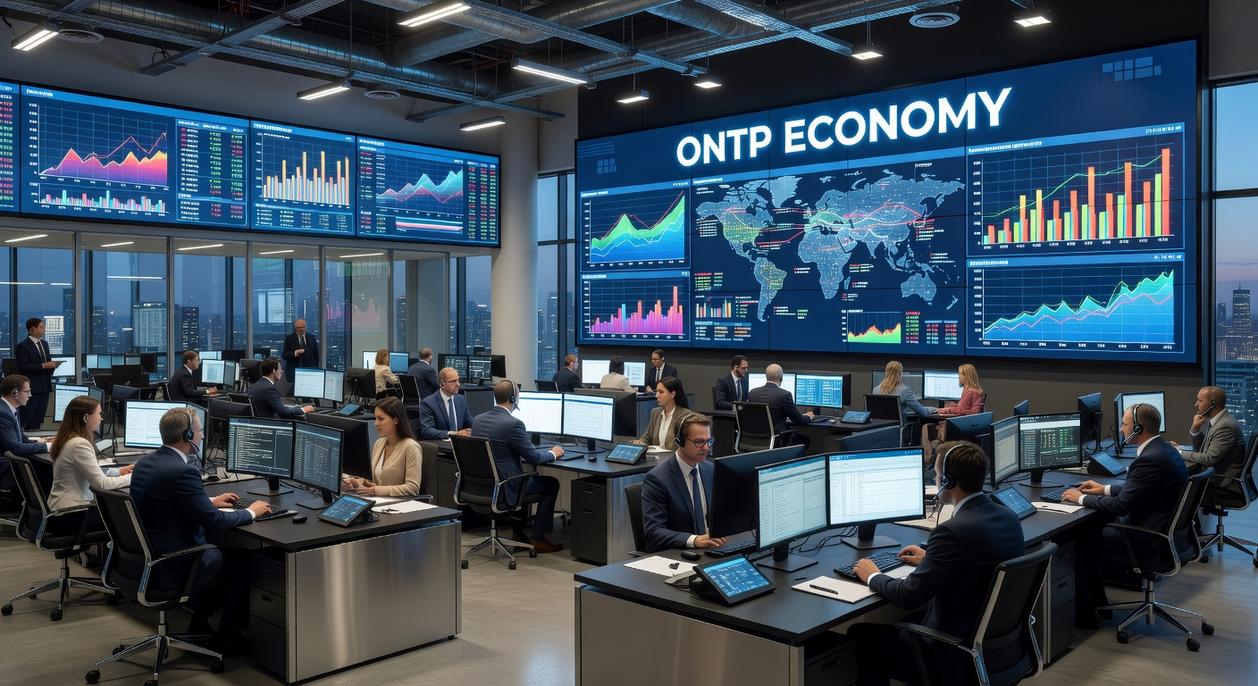
You’ve probably seen the headlines.
Ontario’s unemployment rate looks stable. Maybe even good compared to a year ago.
But if you’re actually living here and watching your paycheck, something feels off.
That’s because the headline number only tells half the story.
I’ve been digging through the employment data for months now. What I found is pretty clear. We’re not dealing with one labour market. We’re dealing with two completely different economies running side by side.
Where the Jobs Actually Are
Let me break this down.
Skilled trades and healthcare? They’re on fire. Job vacancies in these sectors are sitting at near-record levels. Employers can’t find enough people. If you’re a licensed electrician or a registered nurse, you’re probably fielding multiple offers right now.
But retail and hospitality? That’s a different world. Those sectors are cooling fast. Hours are getting cut. Positions that used to be easy to fill are now getting flooded with applicants.
The labour force participation rate tells you who’s actually looking for work versus who’s given up. Right now it’s holding steady, but when you split it by sector, you see the divide.
Some people argue this is just normal market adjustment. They say workers should simply retrain for the hot sectors. And sure, that sounds reasonable on paper.
Here’s what they’re missing though.
Retraining takes time. It takes money. A 45-year-old retail manager can’t just become a plumber overnight. The mismatch creates real pain for real people while the economy “adjusts.”
The Wage Problem Nobody Talks About
Now let’s talk about what you’re actually taking home.
Average hourly wages are up. The data shows growth of around 4 to 5 percent year over year in most sectors. That sounds good until you compare it to Ontario’s inflation rate.
When I run the numbers through ontpeconomy models, the picture gets clearer. Your wages are growing, but your purchasing power? It’s actually shrinking in many cases.
Here’s what that means:
- You’re making more dollars per hour
- Those dollars buy less than they did last year
- Your actual standard of living is going backward
This hits the service economy hard. When people feel poorer, they cut back on dining out, entertainment, and non-essentials. Which circles back to why retail and hospitality are struggling.
It’s a feedback loop. And right now, it’s working against a big chunk of Ontario workers.
Data-Driven Outlook: Key Risks and Opportunities
The green energy transition is real. And the money flowing into it proves that.
Northern Ontario is seeing billions pour into renewable projects and critical minerals. Lithium, nickel, cobalt. The stuff that makes batteries work. Canada has it, and investors know it.
Some people say this is just another bubble. That we’re overestimating demand for electric vehicles and clean energy infrastructure.
Maybe. But the capital commitments I’m tracking at ontpeconomy tell a different story. These aren’t speculative bets anymore. They’re long-term plays backed by government policy and corporate mandates.
Now for the risk nobody wants to talk about.
A U.S. slowdown hits Ontario hard. We export heavily to American markets. When they slow down, we feel it fast. Manufacturing contracts. Job growth stalls. Tax revenues drop.
The opportunity? Immigration keeps the engine running.
Ontario is adding hundreds of thousands of new residents every year. They need homes. They need infrastructure. They need services.
That creates demand even when exports soften. Housing starts might slow, but they won’t collapse. Not with population growth like this.
The math is simple. More people means more spending. More spending means more opportunities for smart investors who position themselves correctly. As the gaming industry continues to expand, savvy players often find themselves pondering the question, “How Many Financial Advisors Should You Have Ontpeconomy” to navigate the increasing opportunities that arise from a growing market and heightened consumer spending. As the gaming industry continues to flourish and attract new players, many are left contemplating the crucial question of “How Many Financial Advisors Should You Have Ontpeconomy” to effectively navigate their burgeoning wealth in this dynamic landscape.
Your Strategic Takeaway from the Data
You came here for objective insights into Ontario’s economy. Now you have them.
Making strategic decisions in an uncertain economic climate is tough. The noise drowns out the signal and you’re left guessing.
But when you focus on core data trends across key sectors, you build something stronger. A business strategy that bends instead of breaks. An investment thesis that holds up when conditions shift.
I’ve shown you the analytical framework. Now you need to use it.
Take your portfolio or business plan and test it against these economic forces. See where you’re exposed and where you’re positioned well. The data doesn’t lie about what’s shaping Ontario’s future.
ontpeconomy exists to give you this kind of clarity. We cut through the headlines and show you what the numbers actually say.
Your next step is simple: Apply this framework to your own situation and adjust accordingly.
The economy keeps moving. Make sure you’re moving with it. Financial Advice Ontpeconomy. What Financial Help Can I Get Ontpeconomy.
 Founder & Chief Executive Officer (CEO)
Elryssa Meldraina has opinions about capital flow strategies. Informed ones, backed by real experience — but opinions nonetheless, and they doesn't try to disguise them as neutral observation. They thinks a lot of what gets written about Capital Flow Strategies, Expert Tutorials, Financial Trends Tracker is either too cautious to be useful or too confident to be credible, and they's work tends to sit deliberately in the space between those two failure modes.
Reading Elryssa's pieces, you get the sense of someone who has thought about this stuff seriously and arrived at actual conclusions — not just collected a range of perspectives and declined to pick one. That can be uncomfortable when they lands on something you disagree with. It's also why the writing is worth engaging with. Elryssa isn't interested in telling people what they want to hear. They is interested in telling them what they actually thinks, with enough reasoning behind it that you can push back if you want to. That kind of intellectual honesty is rarer than it should be.
What Elryssa is best at is the moment when a familiar topic reveals something unexpected — when the conventional wisdom turns out to be slightly off, or when a small shift in framing changes everything. They finds those moments consistently, which is why they's work tends to generate real discussion rather than just passive agreement.
Founder & Chief Executive Officer (CEO)
Elryssa Meldraina has opinions about capital flow strategies. Informed ones, backed by real experience — but opinions nonetheless, and they doesn't try to disguise them as neutral observation. They thinks a lot of what gets written about Capital Flow Strategies, Expert Tutorials, Financial Trends Tracker is either too cautious to be useful or too confident to be credible, and they's work tends to sit deliberately in the space between those two failure modes.
Reading Elryssa's pieces, you get the sense of someone who has thought about this stuff seriously and arrived at actual conclusions — not just collected a range of perspectives and declined to pick one. That can be uncomfortable when they lands on something you disagree with. It's also why the writing is worth engaging with. Elryssa isn't interested in telling people what they want to hear. They is interested in telling them what they actually thinks, with enough reasoning behind it that you can push back if you want to. That kind of intellectual honesty is rarer than it should be.
What Elryssa is best at is the moment when a familiar topic reveals something unexpected — when the conventional wisdom turns out to be slightly off, or when a small shift in framing changes everything. They finds those moments consistently, which is why they's work tends to generate real discussion rather than just passive agreement.