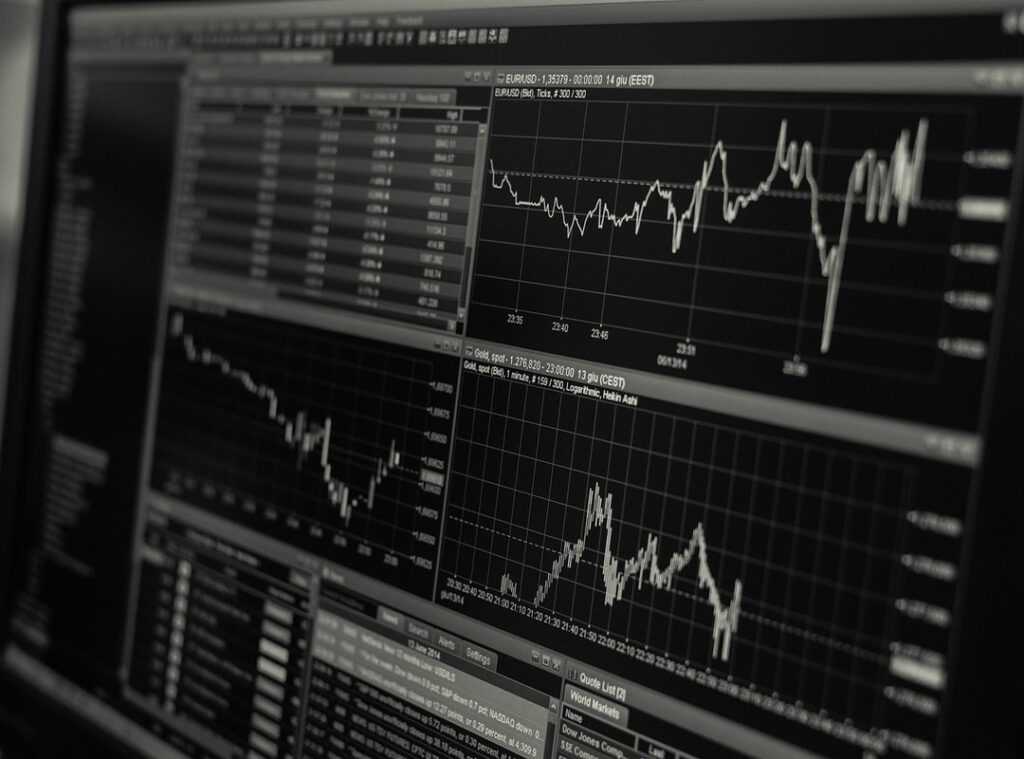

Global markets don’t move randomly—capital moves with purpose. If you want to anticipate currency shifts instead of reacting to them, you need more than headlines and rate decisions. You need a structured approach to capital flow currency analysis that reveals where money is coming from, where it’s going, and why it’s moving.
In this article, we break down the core drivers behind cross-border capital flows, the key macro and liquidity indicators that matter most, and how modern tools—including on-chain data—add a new layer of transparency. Built on rigorous financial research and real-world market analysis, this framework gives you a clear, actionable process for interpreting currency movements with confidence.
The Core Drivers: Understanding What Moves Money
Money doesn’t just move. It rushes, trickles, stampedes—sometimes as quietly as a tide slipping out at dusk.
Foreign Direct Investment (FDI) is long-term, “sticky” capital placed into factories, infrastructure, or entire businesses. Think of a car manufacturer building a plant overseas—the hum of machines, the smell of steel and oil. That’s commitment. FDI signals durable confidence because investors can’t easily pack up a factory and leave (World Bank).
Foreign Portfolio Investment (FPI) is different. It’s “hot” money flowing into stocks and bonds—liquid, fast, and reactive. You can almost hear the click of trading terminals when interest rates change. FPI is highly sensitive to rate differentials and market mood swings (IMF). When yields rise elsewhere, it bolts.
Other investment flows—like cross-border bank loans and trade credits—form the financial system’s plumbing. Invisible, but essential. When they freeze, economies feel it immediately.
So what drives these flows?
- Yield-seeking: Investors chase higher interest rates.
- Safety: Capital flees to “safe haven” currencies during turmoil.
- Growth prospects: Strong GDP outlooks attract long-term bets.
Some argue flows are random noise. But patterns emerge through capital flow currency analysis, revealing why understanding what are capital flows and why they matter in global markets is essential for anticipating the next surge.
Key Indicators for Tracking Traditional Capital Flows
Understanding where money moves globally isn’t guesswork—it’s pattern recognition backed by data. Let’s start with interest rate differentials, the backbone of the carry trade (borrowing in a low-interest currency to invest in a higher-yielding one). When Japan held near‑zero rates while U.S. Treasuries yielded above 5% in 2023 (U.S. Federal Reserve data), capital predictably flowed into dollar assets. Critics argue exchange rate volatility can wipe out yield gains—and they’re right. However, BIS research shows carry strategies have historically delivered positive risk-adjusted returns over long periods, precisely because rate gaps create structural incentives.
Next, consider the Balance of Payments (BoP)—a country’s financial report card. It has two primary components: the Current Account (trade in goods, services, income) and the Capital Account (investment flows). A persistent U.S. current account deficit, averaging around 3% of GDP in recent years (U.S. Bureau of Economic Analysis), must be financed by capital inflows. If foreign investment slows, currency pressure builds. That’s not theory—that’s arithmetic.
Meanwhile, economic growth and stability act as confidence multipliers. Rising GDP forecasts, strong Purchasing Managers’ Index (PMI) readings above 50, and low political risk scores correlate with higher foreign direct investment (World Bank data). Investors allocate long-term capital where growth appears durable (no one parks billions where policy flips overnight).
Finally, terms of trade—the ratio of export prices to import prices—signal structural strength. When commodity exporters like Australia benefit from rising iron ore prices, currency demand often increases. This dynamic frequently surfaces in capital flow currency analysis, reinforcing how trade competitiveness shapes capital direction.
The Digital Frontier: Integrating On-Chain Data into Flow Analysis

Financial markets used to hide their plumbing. Today, blockchains show it in real time. Still, while the data is transparent, interpreting it isn’t always straightforward.
Stablecoins as a Proxy for Dollar Demand
Stablecoins like USDC and USDT are digital tokens pegged to the U.S. dollar. When they move between wallets and exchanges, they create a public trail of global dollar demand—without relying on banks. In theory, rising issuance or exchange inflows signals investors seeking dollar exposure. During periods of emerging market stress, stablecoin supply has expanded sharply (Chainalysis, 2023).
But here’s the caveat: not every transfer equals fresh demand. Some flows are arbitrage, internal rebalancing, or DeFi collateral shifts. Transparency doesn’t eliminate ambiguity. It simply narrows it.
Exchange Inflows and Outflows as Risk Signals
When Bitcoin or Ethereum flows onto exchanges, it often precedes selling pressure—what traders call “risk-off.” Outflows to private wallets suggest longer holding periods, or “risk-on” conviction. Glassnode data has repeatedly shown spikes in exchange inflows before major drawdowns (Glassnode, 2022).
Still, intent is hard to prove. Are holders preparing to sell—or just repositioning? Even with high-frequency data, motives remain partly invisible (markets aren’t a Marvel movie where villains announce their plans).
DeFi Yields and Global Liquidity
DeFi lending protocols offer yields that fluctuate with borrowing demand. Higher yields can signal leverage appetite and tightening liquidity. Some analysts treat this as a leading indicator for broader capital flow currency analysis.
Yet DeFi markets are reflexive and sometimes thin. A yield spike may reflect speculation, not systemic stress. We can observe the flows. We cannot always decode the why.
A Practical Framework for Synthesizing Flow Data
To begin with, start by establishing the macro narrative. This simply means identifying the dominant global theme driving markets—such as central bank tightening, recession fears, or geopolitical strain. These forces shape investor behavior long before price charts react.
Next, analyze traditional signals. Look at interest rate differentials (the gap between one country’s rates and another’s) and Balance of Payments data, which tracks money entering and leaving an economy. Together, they form your baseline directional bias.
Then, layer in high-frequency digital data. On-chain flows—like stablecoin issuance or exchange balances—offer near real-time sentiment clues. Are funds moving onto exchanges to sell, or off exchanges to hold?
Finally, combine these insights into a clear thesis with defined risks. This structured approach to capital flow currency analysis helps you avoid emotional decisions and trade with context. What happens if one layer contradicts the others? That tension often reveals the real opportunity.
From Analysis to Action: Leveraging Capital Flow Insights
You set out to understand how to turn data into direction—and now you have the framework to do it. By combining traditional indicators with on-chain signals and capital flow currency analysis, you can stop reacting to volatility and start anticipating it. Put this approach into practice today: apply the model, refine your strategy, and make every investment decision with clearer conviction and control.
 Chief Economic Strategist
Ask Michael Torresidosan how they got into capital flow strategies and you'll probably get a longer answer than you expected. The short version: Michael started doing it, got genuinely hooked, and at some point realized they had accumulated enough hard-won knowledge that it would be a waste not to share it. So they started writing.
What makes Michael worth reading is that they skips the obvious stuff. Nobody needs another surface-level take on Capital Flow Strategies, Wealth Planning Techniques, Expert Tutorials. What readers actually want is the nuance — the part that only becomes clear after you've made a few mistakes and figured out why. That's the territory Michael operates in. The writing is direct, occasionally blunt, and always built around what's actually true rather than what sounds good in an article. They has little patience for filler, which means they's pieces tend to be denser with real information than the average post on the same subject.
Michael doesn't write to impress anyone. They writes because they has things to say that they genuinely thinks people should hear. That motivation — basic as it sounds — produces something noticeably different from content written for clicks or word count. Readers pick up on it. The comments on Michael's work tend to reflect that.
Chief Economic Strategist
Ask Michael Torresidosan how they got into capital flow strategies and you'll probably get a longer answer than you expected. The short version: Michael started doing it, got genuinely hooked, and at some point realized they had accumulated enough hard-won knowledge that it would be a waste not to share it. So they started writing.
What makes Michael worth reading is that they skips the obvious stuff. Nobody needs another surface-level take on Capital Flow Strategies, Wealth Planning Techniques, Expert Tutorials. What readers actually want is the nuance — the part that only becomes clear after you've made a few mistakes and figured out why. That's the territory Michael operates in. The writing is direct, occasionally blunt, and always built around what's actually true rather than what sounds good in an article. They has little patience for filler, which means they's pieces tend to be denser with real information than the average post on the same subject.
Michael doesn't write to impress anyone. They writes because they has things to say that they genuinely thinks people should hear. That motivation — basic as it sounds — produces something noticeably different from content written for clicks or word count. Readers pick up on it. The comments on Michael's work tend to reflect that.