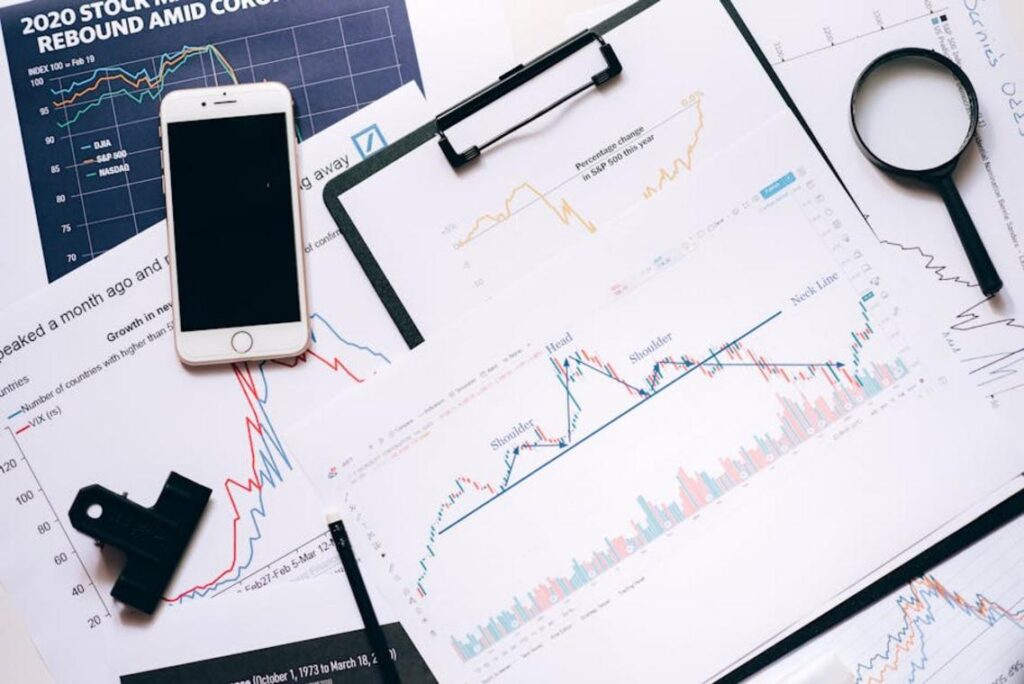

Understanding where the economy is heading starts with knowing how capital is moving today. If you’re searching for clarity on financial trends, economic fundamentals, or on-chain capital flows, this article is designed to give you structured, actionable insights—not vague predictions. We break down the forces shaping markets, from liquidity cycles and macro indicators to digital asset models and long-term wealth planning frameworks.
You’ll learn how to interpret capital rotation, evaluate risk across asset classes, and apply financial data visualization techniques to make complex information easier to analyze and act on. Rather than relying on headlines, we focus on measurable indicators, historical context, and data-backed models that serious investors use to guide decisions.
Our analysis draws on established economic principles, real-time market data, and quantitative modeling approaches to ensure accuracy and relevance. By the end, you’ll have a clearer understanding of how to read the signals driving today’s economy—and how to position yourself strategically within it.
Spreadsheets packed with figures often bury the insight leaders need, leading to stalled decisions and missed opportunities. Some argue that raw data speaks for itself, that serious professionals prefer dense reports. But clarity is not dumbing down; it is sharpening focus. This article outlines a strategic framework for transforming complexity into persuasive visuals using financial data visualization techniques. When numbers become stories, action follows. You will move from aligning visuals with audience priorities to selecting charts, highlighting trends, and applying advanced layering strategies that reveal risk, capital flows, and performance drivers with precision. Better visuals drive smarter financial decisions consistently.
The Foundation: Aligning Visuals with Audience and Objective
Every effective chart starts with why. Before opening any dashboard tool, define the single question you are answering. What is the one takeaway your audience must remember tomorrow? If you cannot state it in one sentence, your visual will drift.
Next, know your audience. A C-suite executive needs high-level KPIs, trend summaries, and clear comparisons over time. A financial analyst, by contrast, expects granular breakdowns, filters, and drill-down capability. The same revenue dataset can produce two very different visuals depending on who is viewing it (think Captain America’s shield versus Tony Stark’s control panel).
Also distinguish between explanatory and exploratory analysis. Explanatory visuals present a finished conclusion, prioritizing clarity, hierarchy, and minimal noise. Exploratory visuals help you discover patterns, so they allow interaction, segmentation, and layered financial data visualization techniques. Different goals require different design rules.
Before choosing a chart, write:
- My Audience is ____.
- The Key Message is ____.
- The Action I want them to take is ____.
Pro tip: If the action is unclear, simplify the visual until it becomes obvious.
Clarity compounds impact, especially when decisions involve capital allocation, risk exposure, or performance accountability across teams and time horizons.
Core Visualization Techniques for Financial Storytelling
Great financial visuals don’t start with charts. They start with a story. Are you showing growth, explaining losses, or proving a relationship? Once you know the narrative, the right visual becomes obvious (and you avoid the dreaded “spreadsheet screenshot” presentation slide).
Showing Comparison & Change Over Time
If your story is about comparison, bar charts are your workhorse. Vertical or horizontal bars make it easy to compare quarterly revenue, regional performance, or budget vs. actual figures. Our brains are wired to compare lengths quickly—Cleveland & McGill’s research on graphical perception confirms this (1984).
Meanwhile, line charts shine when showing change over time. Tracking stock performance across a fiscal year? Monitoring monthly cash flow? A clean line chart reveals trends, inflection points, and volatility at a glance. It’s basically the Netflix series of finance—easy to follow, full of plot twists.
Showing Composition & Contribution
Now suppose you’re walking through a P&L statement. A waterfall chart is your best friend. It clearly shows how revenue flows through costs and expenses to reach net income, separating positive and negative contributions step by step. In other words, it answers: “Where did the money actually go?”
Pie or donut charts can illustrate simple part-to-whole relationships like market share. However, once you exceed three or four categories, clarity collapses. (If your pie chart looks like abstract art, it’s time to reconsider.)
Showing Distribution & Relationships
Histograms reveal frequency distribution—perfect for visualizing investment returns or risk exposure. You instantly see clustering, skewness, and outliers.
Scatter plots, on the other hand, uncover correlations, such as marketing spend vs. new customer acquisition. Add a trendline, and patterns jump out. Of course, correlation isn’t causation—but it’s a strong starting point.
Ultimately, mastering financial data visualization techniques strengthens decision-making. And if you’re exploring broader market signals, learn how to track financial market trends using leading indicators for deeper context.
Advanced Strategies for Dynamic Financial Reporting

Static reports are the financial equivalent of a DVD menu screen—useful, but frozen in time. Interactive dashboards change the experience entirely. Instead of passively reading numbers, users can filter time periods, drill into line items, and compare segments dynamically. The shift is subtle but powerful: from presentation to exploration. (Think less spreadsheet, more Spotify Wrapped for your balance sheet.)
Some critics argue dashboards overwhelm decision-makers with too many options. That can happen. But when designed well, they reduce cognitive load by letting stakeholders surface only what matters to them.
Visualizing capital movement adds another layer of clarity. Sankey diagrams map how revenue streams branch into expense categories, instantly exposing bottlenecks or inefficiencies. Heatmaps, meanwhile, color-code portfolio performance or risk matrices so patterns jump out at a glance—like market sentiment glowing red during a sell-off.
- Drill-down filters for granular variance analysis
- Color gradients to highlight volatility clusters
Use financial data visualization techniques in the section once exactly as it is given
Modern applications extend these principles to on-chain financial models, where wallet flows, staking rewards, and liquidity pools can be tracked visually—bringing Wall Street logic to blockchain transparency.
Avoiding Deception: Common Pitfalls in Data Visualization
Maintaining integrity means knowing what not to do. For instance, truncating the Y-axis can exaggerate minor changes, making a modest 2% revenue bump look like explosive growth (a trick that’s older than late-night infomercials). Some argue this simply “highlights trends.” However, clarity should never come at the expense of accuracy—misleading scales distort judgment and capital allocation decisions.
Likewise, the data-ink ratio—a term coined by Edward Tufte (1983)—urges us to strip away chartjunk so the focus remains on the numbers. While decorative graphics may seem engaging, disciplined financial data visualization techniques prioritize signal over noise.
Finally, correlation isn’t causation. Two rising lines don’t prove one drives the other.
From Data Points to Decision-Making
Raw numbers alone? Overwhelming. Strategic visuals? Actionable. That’s the difference.
A spreadsheet packed with figures (A) forces stakeholders to hunt for meaning. A clear chart tied to a decision (B) highlights trends, gaps, and priorities instantly. The goal of financial data visualization techniques isn’t decoration—it’s direction.
- Data dump: Confusion, delayed decisions
- Audience-aware visuals: Clarity, confident action
If numbers feel intimidating, that’s the pain point. Structure solves it. Next time you review a P&L, choose a waterfall chart over a static table. One shift in format can transform passive reporting into proactive strategy.
Take Control of Your Financial Edge
You set out to better understand how financial trends, capital flows, and on-chain models shape real-world wealth decisions. Now you have a clearer framework for interpreting the signals that move markets and influence long-term strategy.
The real challenge was never access to information — it was knowing how to interpret it before opportunities pass you by. By applying disciplined analysis, structured capital allocation, and financial data visualization techniques, you turn complex datasets into actionable insight instead of noise.
But insight only creates results when you act on it.
If you’re serious about strengthening your portfolio, protecting your capital, and positioning yourself ahead of economic shifts, now is the time to go deeper. Explore advanced market breakdowns, refine your wealth planning approach, and start implementing data-backed strategies today.
Thousands of financially driven readers rely on these insights to stay ahead of volatility and uncover emerging opportunities. Don’t fall behind.
Take the next step now — dive into the latest analysis, apply what you’ve learned, and start building a smarter, more resilient financial future.
 Founder & Chief Executive Officer (CEO)
Elryssa Meldraina has opinions about capital flow strategies. Informed ones, backed by real experience — but opinions nonetheless, and they doesn't try to disguise them as neutral observation. They thinks a lot of what gets written about Capital Flow Strategies, Expert Tutorials, Financial Trends Tracker is either too cautious to be useful or too confident to be credible, and they's work tends to sit deliberately in the space between those two failure modes.
Reading Elryssa's pieces, you get the sense of someone who has thought about this stuff seriously and arrived at actual conclusions — not just collected a range of perspectives and declined to pick one. That can be uncomfortable when they lands on something you disagree with. It's also why the writing is worth engaging with. Elryssa isn't interested in telling people what they want to hear. They is interested in telling them what they actually thinks, with enough reasoning behind it that you can push back if you want to. That kind of intellectual honesty is rarer than it should be.
What Elryssa is best at is the moment when a familiar topic reveals something unexpected — when the conventional wisdom turns out to be slightly off, or when a small shift in framing changes everything. They finds those moments consistently, which is why they's work tends to generate real discussion rather than just passive agreement.
Founder & Chief Executive Officer (CEO)
Elryssa Meldraina has opinions about capital flow strategies. Informed ones, backed by real experience — but opinions nonetheless, and they doesn't try to disguise them as neutral observation. They thinks a lot of what gets written about Capital Flow Strategies, Expert Tutorials, Financial Trends Tracker is either too cautious to be useful or too confident to be credible, and they's work tends to sit deliberately in the space between those two failure modes.
Reading Elryssa's pieces, you get the sense of someone who has thought about this stuff seriously and arrived at actual conclusions — not just collected a range of perspectives and declined to pick one. That can be uncomfortable when they lands on something you disagree with. It's also why the writing is worth engaging with. Elryssa isn't interested in telling people what they want to hear. They is interested in telling them what they actually thinks, with enough reasoning behind it that you can push back if you want to. That kind of intellectual honesty is rarer than it should be.
What Elryssa is best at is the moment when a familiar topic reveals something unexpected — when the conventional wisdom turns out to be slightly off, or when a small shift in framing changes everything. They finds those moments consistently, which is why they's work tends to generate real discussion rather than just passive agreement.