
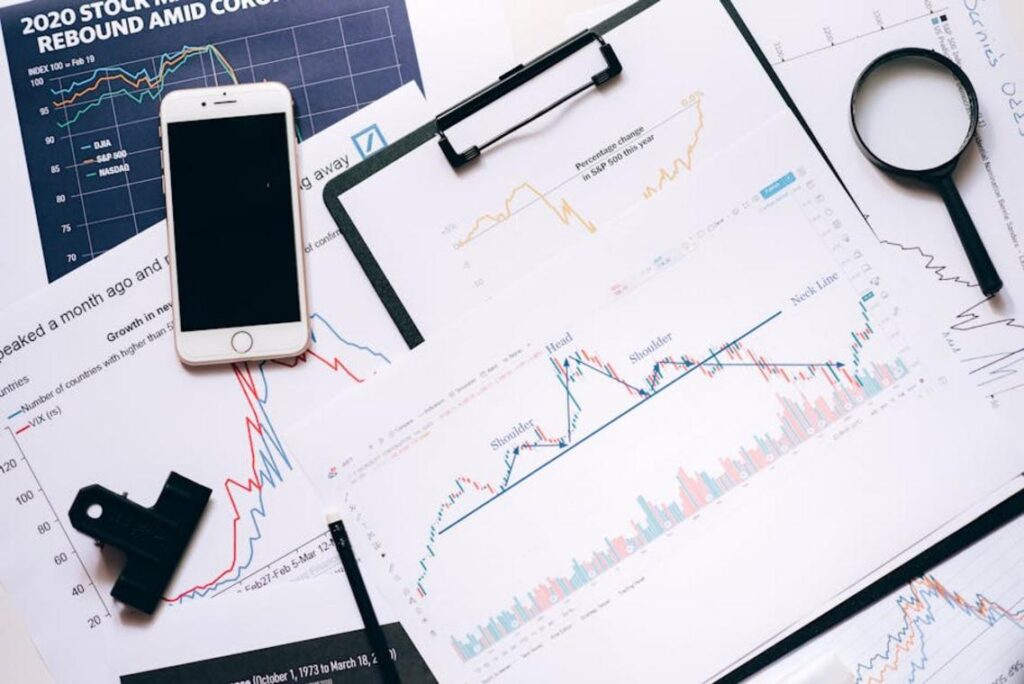
If you’re searching for clarity in today’s unpredictable financial landscape, this article is designed to give you exactly that. Markets are shifting rapidly, capital is rotating across asset classes, and on-chain signals are increasingly influencing traditional finance. Understanding what’s happening—and why—requires more than headlines. It requires a firm grasp of economic fundamentals and how they connect to real-time capital flows.
In this piece, we break down the key financial trends shaping the current environment, explain the structural forces driving market movements, and explore how on-chain models and macro indicators intersect. You’ll gain practical insights into capital flow strategies and long-term wealth planning approaches grounded in data, not speculation.
Our analysis draws on established financial principles, quantitative models, and ongoing market research to ensure accuracy and relevance. By the end, you’ll have a clearer framework for interpreting market signals and making informed financial decisions with greater confidence.
Why the Price of Milk Matters More Than You Think
Milk prices seem small, but they reflect scarcity (limited resources), supply and demand (how availability and desire interact), and the difference between micro and macroeconomics (individual markets versus economies). When drought reduces feed, supply shrinks and prices rise. That’s not random—it’s a signal.
Understanding this helps you:
- Budget smarter
- Spot inflation early
- Make better career and investment choices
Some argue one grocery item can’t reveal much. But staples are economic thermometers (like the CPI; Bureau of Labor Statistics). Master the economic fundamentals explained in the section, and headlines make sense.
Scarcity: The Fundamental Economic Problem
Scarcity is the core tension in economics: human wants exceed available resources. Even in wealthy nations, there is never enough time, money, labor, or raw materials to satisfy every desire. That imbalance forces choices. And every choice has consequences (yes, even the small ones).
Wants vs. Needs
Needs are essentials like food, shelter, and healthcare. Wants are everything beyond survival—streaming subscriptions, upgraded cars, designer coffee. Wants are unlimited; resources are limited. Think of it as A vs. B: unlimited wishlist on one side, finite budget on the other. The clash between them is what drives economic fundamentals explained in the section.
Opportunity Cost Explained
Opportunity cost is the value of the next-best alternative you give up when making a decision. Choose A, and you sacrifice B. There is no neutral option.
Practical Example: Phone vs. Investment
Option A: Buy the new phone today.
Option B: Invest that same $1,000.
The opportunity cost of the phone isn’t just $1,000—it’s the potential compound growth that money could earn over time (which, historically, averages about 7–10% annually in diversified stock markets, according to long-term S&P 500 data). Scarcity makes the decision necessary; opportunity cost makes it meaningful. Ultimately.
Supply and Demand: How Market Prices Are Really Set
At the heart of markets are two simple forces: supply and demand. While they can sound abstract, they’re actually straightforward once unpacked.
First, The Law of Demand states that, all else being equal, as the price of a product increases, the quantity demanded falls. In plain terms, when something gets more expensive, people buy less of it. “Quantity demanded” simply means how much of a good consumers are willing and able to purchase at a given price. Think about concert tickets: if prices double, some fans stay home (even the die-hards have limits).
On the other hand, The Law of Supply works in reverse. As the price of a product increases, the quantity producers are willing to supply increases. Higher prices mean higher potential profits, which motivates businesses to produce more. “Quantity supplied” refers to how much sellers are willing and able to offer for sale at a specific price.
So where do prices actually settle? That happens at equilibrium—the point where quantity supplied equals quantity demanded. This “market price” balances buyers and sellers so there’s no persistent shortage or surplus.
Consider the housing market. When many buyers compete for few homes (high demand, low supply), prices rise. Conversely, when listings pile up and buyers are scarce, prices fall. This is how supply and demand shape modern economies.
These are economic fundamentals explained in the section once exactly as it is given, yet they remain powerful tools for understanding real-world price movements.
Two Lenses for Viewing the Economy: Micro vs. Macro

Understanding the economy is easier when you realize there are two main lenses to look through: micro and macro.
Microeconomics: The Small Picture
Microeconomics is the study of individual economic agents—households, workers, and businesses—and how they make decisions. It zooms in on everyday choices.
For example:
- How does a company decide what price to charge for its product?
- How does a family manage its monthly budget?
- Why does a worker choose one job over another?
Microeconomics looks at supply and demand (how availability and desire affect price), competition, and costs. If a coffee shop raises prices after rent increases, that’s microeconomics in action. Think of it as the “Street View” of the economy.
Macroeconomics: The Big Picture
Macroeconomics studies the economy as a whole. Instead of one coffee shop, it looks at entire industries—or entire countries.
It focuses on big indicators like inflation (rising prices), unemployment (joblessness rates), and GDP (Gross Domestic Product, or total output). Governments use tools like interest rates and taxation to influence these trends. When central banks raise interest rates to fight inflation, that’s macroeconomics at work.
Put simply, micro explains individual choices; macro explains nationwide outcomes. Both are economic fundamentals explained in the section—and you need both lenses to truly understand how money moves.
Three Key Numbers That Measure an Economy’s Health
Understanding three core indicators gives you a practical edge when interpreting headlines or planning investments. These are the economic fundamentals explained in the section that help you see what’s really happening beneath the noise.
Gross Domestic Product (GDP) is the total monetary value of all finished goods and services produced within a country’s borders over a specific period. When GDP rises, businesses are producing more and consumers are spending more—both signs of expansion. That growth can translate into job creation and stronger markets (which is why investors cheer quarterly GDP reports).
Next, the inflation rate measures how quickly overall prices rise, reducing purchasing power. Moderate inflation is normal, but high inflation erodes savings and wages. Central banks typically target around 2% annually (Federal Reserve).
Finally, the unemployment rate tracks the percentage of people actively seeking work but unable to find it. Lower unemployment often signals stability and opportunity.
Pro tip: Watch how these numbers move together—not in isolation—to spot trends early.
Using Your New Economic Toolkit
You now understand that the economy is driven by the choices people make in the face of scarcity, balanced by the forces of supply and demand. That’s not just textbook theory—it’s the plot twist behind headlines that feel as dramatic as a season finale of Succession.
When prices rise or markets fall, remember:
- Scarcity shapes value
- Incentives drive behavior
Gas prices spike? Limited supply meets steady demand. National debt debates trend on X? Competing priorities under constraint.
Like spotting Easter eggs in a Marvel movie, start noticing these forces daily. The world feels chaotic—and explainable.
Turn Insight Into Financial Leverage
You came here to better understand the forces shaping today’s financial landscape — from capital flows to on-chain models and economic fundamentals explained in practical terms. Now you have the clarity to see how these elements connect and influence real wealth-building opportunities.
The real challenge was never access to information. It was making sense of shifting trends before they impact your portfolio. When capital moves quickly and narratives change overnight, hesitation can cost you growth, security, and long-term positioning.
That’s why applying what you’ve learned matters. Track capital rotation. Revisit the core indicators behind major market shifts. Align your wealth planning strategy with data, not headlines.
If you’re serious about staying ahead of financial cycles and building durable wealth, start implementing these insights today. Join thousands of forward-thinking readers who rely on proven capital flow strategies and data-driven analysis to make confident decisions. Don’t wait for the next shift to react — position yourself now.
 Head of Financial Content & Analytics
Victorian Shawerdawn writes the kind of on-chain economic models content that people actually send to each other. Not because it's flashy or controversial, but because it's the sort of thing where you read it and immediately think of three people who need to see it. Victorian has a talent for identifying the questions that a lot of people have but haven't quite figured out how to articulate yet — and then answering them properly.
They covers a lot of ground: On-Chain Economic Models, Capital Flow Strategies, Financial Trends Tracker, and plenty of adjacent territory that doesn't always get treated with the same seriousness. The consistency across all of it is a certain kind of respect for the reader. Victorian doesn't assume people are stupid, and they doesn't assume they know everything either. They writes for someone who is genuinely trying to figure something out — because that's usually who's actually reading. That assumption shapes everything from how they structures an explanation to how much background they includes before getting to the point.
Beyond the practical stuff, there's something in Victorian's writing that reflects a real investment in the subject — not performed enthusiasm, but the kind of sustained interest that produces insight over time. They has been paying attention to on-chain economic models long enough that they notices things a more casual observer would miss. That depth shows up in the work in ways that are hard to fake.
Head of Financial Content & Analytics
Victorian Shawerdawn writes the kind of on-chain economic models content that people actually send to each other. Not because it's flashy or controversial, but because it's the sort of thing where you read it and immediately think of three people who need to see it. Victorian has a talent for identifying the questions that a lot of people have but haven't quite figured out how to articulate yet — and then answering them properly.
They covers a lot of ground: On-Chain Economic Models, Capital Flow Strategies, Financial Trends Tracker, and plenty of adjacent territory that doesn't always get treated with the same seriousness. The consistency across all of it is a certain kind of respect for the reader. Victorian doesn't assume people are stupid, and they doesn't assume they know everything either. They writes for someone who is genuinely trying to figure something out — because that's usually who's actually reading. That assumption shapes everything from how they structures an explanation to how much background they includes before getting to the point.
Beyond the practical stuff, there's something in Victorian's writing that reflects a real investment in the subject — not performed enthusiasm, but the kind of sustained interest that produces insight over time. They has been paying attention to on-chain economic models long enough that they notices things a more casual observer would miss. That depth shows up in the work in ways that are hard to fake.