

Understanding where the economy is headed requires more than headlines and market noise. If you’re searching for clarity on financial trends, capital flows, and the forces shaping wealth creation, this article is designed to give you exactly that. We break down the core economic fundamentals driving today’s markets, explain how liquidity moves across systems, and highlight the structural signals that matter most for long-term positioning.
You’ll gain a clear view of how policy decisions, on-chain data models, and macro indicators intersect — and why the central bank role remains pivotal in influencing capital allocation, risk appetite, and currency stability. Rather than speculation, this analysis draws on data-backed frameworks, historical market cycles, and proven wealth planning principles.
By the end, you’ll understand not just what is happening in the economy, but how to interpret it — and more importantly, how to position yourself strategically in response.
The price of milk, your mortgage rate, your 401(k) balance are nudged by an invisible engine: the central bank. Most people hear about rate hikes on the news yet grasp the central bank role in steering inflation, employment, and liquidity (liquidity means how money moves). Here’s what you need to know:
- Set interest rates: Higher rates cool borrowing; lower rates stimulate spending. If rates rise, consider refinancing early.
- Control money supply: More money can spark inflation (too many dollars chasing goods).
- Regulate banks: Keeps savings safer.
- Act as lender of last resort: Prevents crashes.
- Manage currency stability: Impacts and imports.
Function 1: Steering the Economy with Monetary Policy
A few years ago, I remember locking in a mortgage rate that felt almost absurdly low. Friends told me, “Rates will never be this cheap again.” Within a year, they were right. My monthly payment would have been hundreds more if I’d waited. That experience made monetary policy very real to me.
At its core, the central bank role is guided by a dual mandate—two primary objectives: price stability (keeping inflation, or the rate at which prices rise, under control) and maximum sustainable employment (the highest level of jobs an economy can maintain without overheating). When inflation spikes—like it did globally in 2022, topping 8% in the U.S. (U.S. Bureau of Labor Statistics)—policymakers step in.
So how do they steer something as massive as an economy? First and foremost, through interest rates. By raising the key policy rate (such as the Federal Funds Rate), borrowing becomes more expensive. Consequently, mortgages, car loans, and business financing slow down. On the other hand, lowering rates encourages spending and investment (think: cheaper credit fueling expansion).
Then there’s Quantitative Easing (QE) and Quantitative Tightening (QT). QE involves buying government bonds to inject liquidity into the financial system; QT does the reverse, pulling money out. The Federal Reserve’s balance sheet surged past $8 trillion during QE programs (Federal Reserve Economic Data), illustrating how powerful this tool can be.
You might argue markets should self-correct without intervention. Fair point. However, history—from the Great Depression to 2008—shows delayed action can deepen crises (and no one wants a sequel). Ultimately, these policies ripple directly into your savings, investments, and everyday costs.
Function 2: Guardian of Financial Stability
At its core, this function is about preventing and containing systemic financial crises—a systemic crisis meaning a breakdown that spreads across the entire financial system, not just one failing bank. Think 2008, when collapsing mortgage assets triggered global panic (and yes, THAT kind of chaos).
The central bank acts as the ultimate backstop. In its central bank role, it becomes the lender of last resort—providing emergency liquidity to banks that are solvent but temporarily illiquid. Illiquid means they don’t have enough cash on hand, even if their assets are sound. Without this support, fear can spark bank runs, where depositors rush to withdraw funds all at once. Contagion follows fast.
Then there’s regulation and supervision:
- Setting capital requirements (minimum financial cushions banks must hold)
- Monitoring risk exposure
- Stress-testing balance sheets under worst-case scenarios
Some critics argue regulation stifles innovation and slows profits. Fair point—compliance can feel heavy. But unchecked risk-taking? That’s how bubbles form and BURST.
Why does this matter to you? Because your deposits, mortgage access, and everyday transactions depend on TRUST. Without stability, credit freezes, markets panic, and ordinary savers pay the price. Stability isn’t flashy—but it keeps the lights on.
Function 3: The Government’s and Banks’ Banker
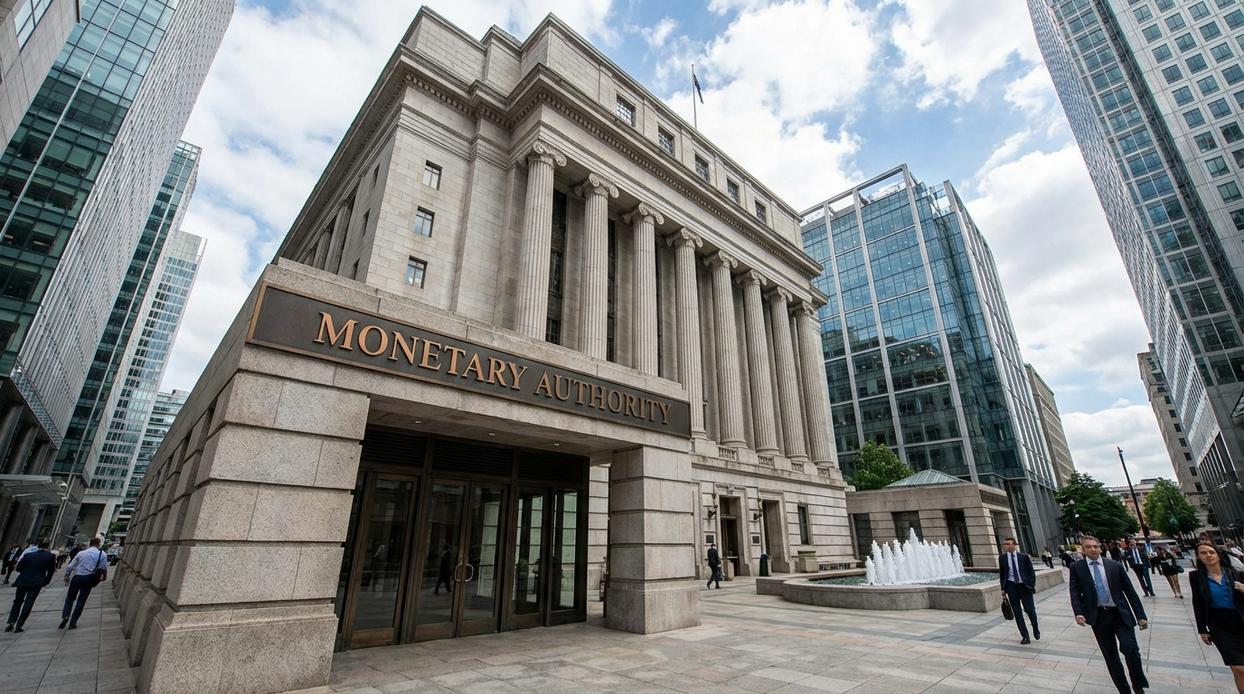
At its core, the central bank manages the government’s primary checking account. In practice, this means it collects tax revenues, processes payments, issues Treasury bonds, and redeems them at maturity. It also manages foreign currency reserves—holdings of other nations’ money used to stabilize exchange rates and pay international obligations (Federal Reserve, 2023). In short, this is a critical part of the central bank role.
Serving Commercial Banks
Meanwhile, commercial banks hold reserve accounts at the central bank to settle payments between each other. When you send money across banks, funds move through this interbank system—the backbone of digital finance.
What this means for you:
- Wire transfers clear securely
- ACH payments settle in batches
- Debit card transactions reconcile between banks
So next time your paycheck arrives on time, remember—it’s not magic (even if it feels like it).
Pro tip: To better understand policy impact, review fiscal vs monetary policy key differences explained: https://ontpeconomy.com.co/fiscal-vs-monetary-policy-key-differences-explained/.
Function 4: Issuing Currency and Managing Payments
First and foremost, the central bank acts as the sole issuer of a nation’s physical currency. That means it alone prints banknotes and mints coins, safeguarding their design, security features, and legal status. This exclusive authority preserves trust (and yes, trust is the whole game in money). Without it, counterfeiting risks would spike and confidence would erode quickly.
Beyond cash, the central bank role extends into overseeing the entire payment ecosystem. In other words, it ensures that everything from high-value interbank wire transfers to the tap-to-pay app on your phone runs smoothly and securely. When you send money instantly, it feels effortless—but behind the scenes, settlement systems are constantly balancing liquidity and risk. What happens if those systems fail even for a day?
Personally, I see the digital evolution as inevitable. Research into Central Bank Digital Currencies (CBDCs) could allow policymakers to analyze on-chain data in real time, sharpening economic insight and response times.
Understanding central banks isn’t just for economists; it’s practical wealth planning. When headlines mention rate hikes or liquidity programs, they’re signaling shifts in borrowing costs, asset prices, and savings yields. The central bank role refers to managing money supply and credit conditions to keep inflation stable and the financial system functioning. Think of it as the economy’s thermostat (too hot, prices surge; too cold, growth stalls).
Without this compass, investing is guesswork. Interest rates influence mortgages, bond returns, and even stock valuations because future cash flows are discounted at prevailing rates. Financial stability tools—like capital requirements for banks—are safeguards designed to prevent cascading failures, as seen in 2008 (Federal Reserve, 2023).
Clarity turns noise into strategy. Read policy statements, compare forecasts, and ask: Will tighter policy favor cash and short-term bonds? Will easing support equities? Treat news less like background chatter and more like market weather report—Jedi-level awareness, minus lightsaber.
You set out to understand how shifting economic forces, capital flows, and on-chain signals shape smarter wealth decisions. Now you have a clearer view of how macro trends connect to market behavior—and how the central bank role influences liquidity, risk appetite, and long-term positioning.
The real challenge isn’t access to information. It’s knowing how to interpret it before the market reacts. When inflation cycles turn, when liquidity tightens, when capital rotates—you feel it in your portfolio first. Acting early is what separates reactive investors from strategic ones.
Put Insight Into Action
Now is the time to apply what you’ve learned. Monitor liquidity conditions. Track capital rotation. Stress-test your portfolio against policy shifts. Most importantly, follow structured, data-backed frameworks instead of headlines.
If you’re serious about protecting and growing your wealth, tap into the #1 trusted source for economic breakdowns, on-chain models, and capital flow strategies. Get the insights that serious investors rely on—then put them to work today.
 Chief Economic Strategist
Ask Michael Torresidosan how they got into capital flow strategies and you'll probably get a longer answer than you expected. The short version: Michael started doing it, got genuinely hooked, and at some point realized they had accumulated enough hard-won knowledge that it would be a waste not to share it. So they started writing.
What makes Michael worth reading is that they skips the obvious stuff. Nobody needs another surface-level take on Capital Flow Strategies, Wealth Planning Techniques, Expert Tutorials. What readers actually want is the nuance — the part that only becomes clear after you've made a few mistakes and figured out why. That's the territory Michael operates in. The writing is direct, occasionally blunt, and always built around what's actually true rather than what sounds good in an article. They has little patience for filler, which means they's pieces tend to be denser with real information than the average post on the same subject.
Michael doesn't write to impress anyone. They writes because they has things to say that they genuinely thinks people should hear. That motivation — basic as it sounds — produces something noticeably different from content written for clicks or word count. Readers pick up on it. The comments on Michael's work tend to reflect that.
Chief Economic Strategist
Ask Michael Torresidosan how they got into capital flow strategies and you'll probably get a longer answer than you expected. The short version: Michael started doing it, got genuinely hooked, and at some point realized they had accumulated enough hard-won knowledge that it would be a waste not to share it. So they started writing.
What makes Michael worth reading is that they skips the obvious stuff. Nobody needs another surface-level take on Capital Flow Strategies, Wealth Planning Techniques, Expert Tutorials. What readers actually want is the nuance — the part that only becomes clear after you've made a few mistakes and figured out why. That's the territory Michael operates in. The writing is direct, occasionally blunt, and always built around what's actually true rather than what sounds good in an article. They has little patience for filler, which means they's pieces tend to be denser with real information than the average post on the same subject.
Michael doesn't write to impress anyone. They writes because they has things to say that they genuinely thinks people should hear. That motivation — basic as it sounds — produces something noticeably different from content written for clicks or word count. Readers pick up on it. The comments on Michael's work tend to reflect that.