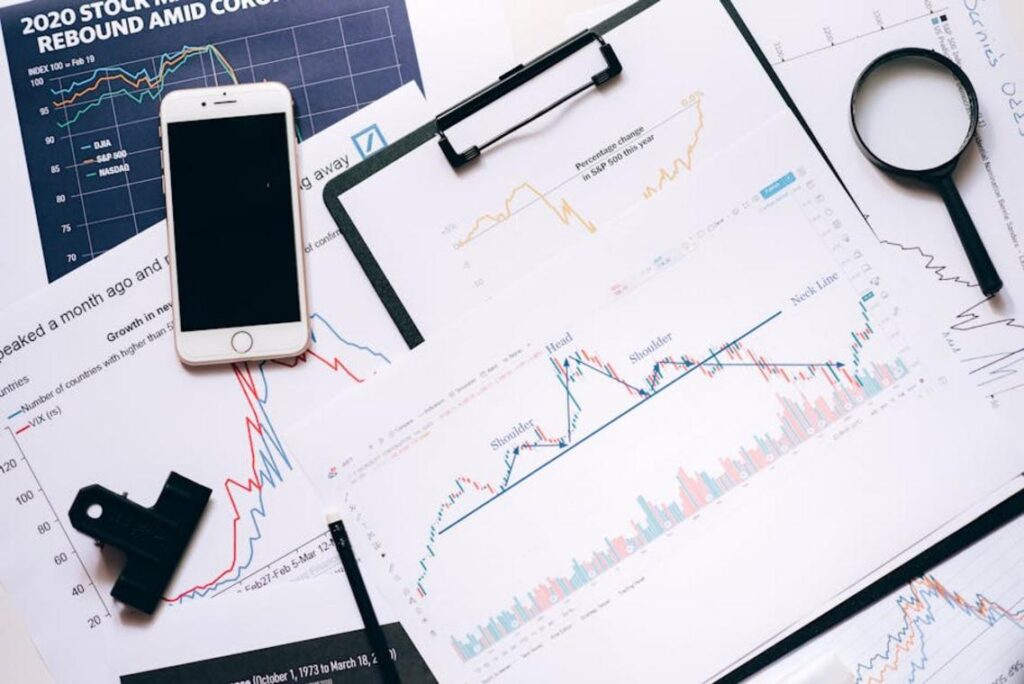

Understanding global financial trends is no longer optional—it’s essential for anyone serious about protecting and growing their wealth. Capital is moving faster than ever across borders, asset classes, and digital ecosystems, reshaping how markets behave and where real opportunities emerge.
If you’re here, you’re likely looking for clarity: What forces are driving today’s economic shifts? How do interest rates, liquidity cycles, and on-chain activity influence capital flows? And most importantly, how can you position yourself strategically instead of reacting too late?
This article breaks down the key macroeconomic forces, capital rotation patterns, and structural signals shaping today’s environment. We connect economic fundamentals with data-backed insights and on-chain models to give you a practical framework—not speculation.
Our analysis is grounded in ongoing market research, economic indicators, and real-time capital flow tracking, ensuring you’re not just informed, but equipped to make confident, forward-thinking financial decisions.
A Practical Guide to the Global Economic Dashboard
Understanding economic indicators (data points that measure activity like inflation, employment, and GDP) is essential for decoding global financial trends. Many argue official releases are enough. After all, central banks rely on them. But these reports lag reality by weeks or months. By the time GDP confirms a slowdown, markets have already reacted.
The smarter approach connects policy decisions, bond yields, and capital flows in real time.
- Watch liquidity shifts alongside inflation expectations.
Skeptics say on-chain data is speculative. Yet forward indicators often signal risk appetite before traditional metrics move decisively today.
Core Vital Signs: GDP, Employment, and Manufacturing Output
Understanding economic health starts with Gross Domestic Product (GDP)—the total value of goods and services produced within a country. But the headline number can mislead (like judging a movie by its trailer). Break GDP into three primary components: consumption (household spending), investment (business capital expenditures), and government spending. If U.S. GDP rises mainly from consumer debt-fueled spending, that’s different from growth driven by productive investment. In China, for example, heavy infrastructure investment can mask weak domestic consumption. Always ask: What’s driving the growth?
Global Employment Trends
Low unemployment sounds great. But when wage growth accelerates too quickly, inflation can follow. This is the “double-edged sword” effect. Track:
- Unemployment rate
- Wage growth
- Labor force participation rate
If wages rise while participation falls, labor shortages may push prices higher. That’s why central banks monitor employment so closely.
Purchasing Managers’ Index (PMI) is a leading indicator—a forward-looking survey of business conditions. A PMI above 50 signals expansion. If Eurozone manufacturing PMI contracts while U.S. services PMI expands, that divergence often foreshadows capital shifts across global financial trends.
Pro tip: Compare PMI trends over three months, not one. Short-term spikes can be noise, not signal.
The Inflation Equation: CPI, Interest Rates, and Central Bank Policy
Inflation isn’t just a headline number—it’s a chain reaction. To understand it, start with CPI (Consumer Price Index) and PPI (Producer Price Index). CPI measures the average change in prices consumers pay for goods and services. PPI, on the other hand, tracks prices producers receive before products reach store shelves. Think of PPI as upstream inflation and CPI as downstream inflation (like tracking a storm before it makes landfall). Historically, rising PPI often filters into CPI within months, making it a useful predictive tool (U.S. Bureau of Labor Statistics).
So what should you do? First, monitor PPI trends alongside CPI releases—not just one or the other. If producer costs surge while CPI remains flat, prepare for delayed consumer price pressure.
Next, consider central bank strategy. The Federal Reserve has maintained higher-for-longer rate guidance to anchor inflation expectations. Meanwhile, the ECB has balanced rate restraint with weak growth concerns, and the Bank of Japan has cautiously shifted away from ultra-loose policy (Federal Reserve; ECB; Bank of Japan statements). These decisions influence currencies, bonds, and equities across global financial trends.
Here’s the critical metric: real yields—calculated as nominal yield minus inflation. If a 10-year bond yields 5% and inflation is 3%, the real yield is 2%. Positive real yields tend to attract capital into bonds; negative real yields push investors toward risk assets. Prioritize tracking real yields weekly (pro tip: rising real yields often pressure gold and tech stocks).
For a broader framework, review the top financial market indicators to watch in 2026.
In short, follow PPI for clues, central banks for direction, and real yields for capital flow signals.
Tracking the Money: Capital Flows and Foreign Exchange (FX)

If you want to understand where capital is moving, start with the US Dollar Index (DXY). The DXY measures the dollar’s value against a basket of major currencies (think euro, yen, pound). When the dollar strengthens, global liquidity often tightens because many debts and commodities are priced in dollars (Federal Reserve data). When it weakens, capital tends to flow outward in search of yield. That’s the theory, at least. In practice, it’s not ALWAYS that clean.
Some argue the dollar is just one variable among many. Fair. Geopolitics, rate expectations, and energy shocks can distort signals. Still, ignoring the dollar’s direction while analyzing global financial trends is like watching the scoreboard with the sound off.
Capital flow analysis helps identify “risk-on” (investors favor equities and emerging markets) versus “risk-off” (flows into bonds, gold, and cash) environments. Gold inflows during crises—like in 2020 (World Gold Council)—are classic risk-off tells.
Emerging markets demand closer scrutiny. Watch current account balances (a country’s trade plus income flows) and external debt levels. Persistent deficits funded by short-term foreign borrowing can precede currency stress (IMF research). That said, predicting crises is notoriously difficult. Even seasoned analysts get blindsided (see: Asia, 1997). Humility is a strategy, too.
The Digital Canary: Using On-Chain Data as a Leading Indicator
Traditional finance waits for quarterly reports. On-chain data updates by the minute. Think of it as a digital canary in the coal mine—a real-time signal of investor sentiment and shifting risk appetite.
Stablecoin Flows as Liquidity Signals
Stablecoins (cryptocurrencies pegged to assets like the U.S. dollar) act like digital cash. When billions flow onto exchanges, it often suggests investors are preparing to buy risk assets. When they exit to private wallets, caution may be rising. Some critics argue stablecoin activity is too crypto-specific to reflect broader global financial trends. That’s fair—but liquidity tends to ripple outward. My speculation: sustained stablecoin inflows could front-run renewed appetite in equities before official liquidity data confirms it.
Bitcoin as a Macro Barometer
Bitcoin’s correlation with the Nasdaq during risk-on periods—and with gold during stress—reveals shifting narratives.
- Rising correlation with tech may signal speculative momentum.
If Bitcoin decouples and trends upward independently, it could foreshadow a broader recalibration of risk tolerance.
You now have a layered framework for reading the economy, from GDP prints to on-chain flows. Yet signals often conflict. Traditional indicators suggest caution; crypto liquidity hints at risk appetite. So which matters more?
Consider two paths:
- Static allocation: set percentages and ignore shifts.
- Dynamic allocation: tilt exposure as inflation, interest rates, and liquidity evolve.
The first offers simplicity. The second offers responsiveness.
Critics argue dynamic strategies invite overtrading. Fair. However, when global financial trends diverge, flexibility preserves capital.
Next, audit your portfolio’s sensitivity to inflation, interest rates, and liquidity—then adjust deliberately, not reactively. Stay disciplined amid volatility.
Position Yourself for What Comes Next
You came here to better understand the forces shaping today’s markets—and now you have a clearer view of how capital flows, on-chain models, and global financial trends intersect to influence real-world wealth outcomes.
The reality is that uncertainty, volatility, and shifting liquidity conditions make it harder than ever to protect and grow your capital. Without a structured approach, it’s easy to fall behind, misread signals, or miss emerging opportunities.
The advantage now is yours. By applying these economic fundamentals and capital flow strategies, you can make informed decisions instead of reactive ones. Wealth building becomes intentional—not accidental.
If you’re ready to turn insight into action, start leveraging proven on-chain models and disciplined wealth planning frameworks today. Join thousands of forward-thinking investors who rely on trusted financial analysis to stay ahead of market shifts. Explore the latest insights now and take control of your financial future with clarity and confidence.
 Chief Economic Strategist
Ask Michael Torresidosan how they got into capital flow strategies and you'll probably get a longer answer than you expected. The short version: Michael started doing it, got genuinely hooked, and at some point realized they had accumulated enough hard-won knowledge that it would be a waste not to share it. So they started writing.
What makes Michael worth reading is that they skips the obvious stuff. Nobody needs another surface-level take on Capital Flow Strategies, Wealth Planning Techniques, Expert Tutorials. What readers actually want is the nuance — the part that only becomes clear after you've made a few mistakes and figured out why. That's the territory Michael operates in. The writing is direct, occasionally blunt, and always built around what's actually true rather than what sounds good in an article. They has little patience for filler, which means they's pieces tend to be denser with real information than the average post on the same subject.
Michael doesn't write to impress anyone. They writes because they has things to say that they genuinely thinks people should hear. That motivation — basic as it sounds — produces something noticeably different from content written for clicks or word count. Readers pick up on it. The comments on Michael's work tend to reflect that.
Chief Economic Strategist
Ask Michael Torresidosan how they got into capital flow strategies and you'll probably get a longer answer than you expected. The short version: Michael started doing it, got genuinely hooked, and at some point realized they had accumulated enough hard-won knowledge that it would be a waste not to share it. So they started writing.
What makes Michael worth reading is that they skips the obvious stuff. Nobody needs another surface-level take on Capital Flow Strategies, Wealth Planning Techniques, Expert Tutorials. What readers actually want is the nuance — the part that only becomes clear after you've made a few mistakes and figured out why. That's the territory Michael operates in. The writing is direct, occasionally blunt, and always built around what's actually true rather than what sounds good in an article. They has little patience for filler, which means they's pieces tend to be denser with real information than the average post on the same subject.
Michael doesn't write to impress anyone. They writes because they has things to say that they genuinely thinks people should hear. That motivation — basic as it sounds — produces something noticeably different from content written for clicks or word count. Readers pick up on it. The comments on Michael's work tend to reflect that.